
Test beneficiation of amblygonite-montebrasite
Test Beneficiation of Amblygonite-Montebrasite
Description
Amblygonite and montebrasite are lithium phosphate minerals which form end members of a solid-solution series and occur in granitic pegmatites associated with spodumene, a more common and traditional lithium ore mineral. These minerals have been observed in significant amounts in some pegmatites within the Slave Geological Province such as in the DeStaffany (Moose II) and Best Bet pegmatite dykes.
Amblygonite (and montebrasite) are not considered lithium ore minerals, and the lithium they contain does not get recovered, but rather reports to the tailings, resulting in lower lithium recovery. Research on lithium ore processing is focused on spodumene, and there is limited information on the fate of amblygonite. This project aims to develop a preliminary flowsheet for the processing of spodumene and amblygonite from pegmatites. If the processing is successful, the recovered amblygonite-montebrasite will be used in a separate project to develop a metallurgical method for processing the amblygonite-montebrasite concentrate into lithium products such as lithium hydroxide and lithium carbonates.
Location
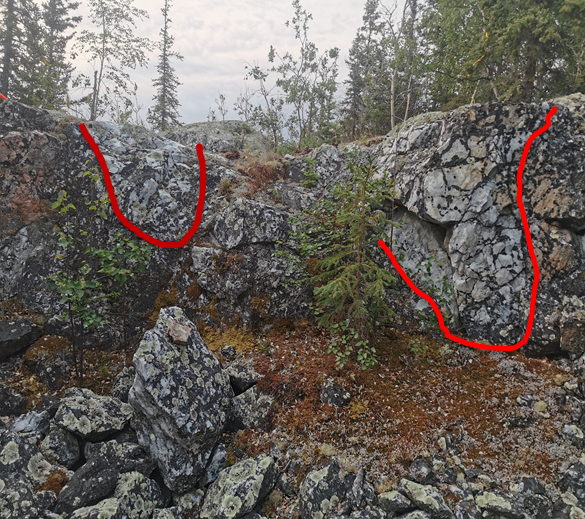
The focus of the project is the DeStaffany pegmatite dyke. The site is located along the north central shores of Hearne Channel on Great Slave Lake, Northwest Territories, about 100 km southeast of Yellowknife.
Justification
Although amblygonite and montebrasite are not currently classified as lithium ore minerals, they generally contain high amounts of lithium (7–10 wt% Li2O), which exceeds that of spodumene. Retaining them in processing wastes and tailings results in lower lithium recoveries from the ores. These minerals are undesirable in spodumene concentrates due to the presence of phosphorus and fluorine, which can emit toxic gases such as hydrogen fluoride (HF) and phosphoryl fluoride (POF3) from the lithium concentrate during processing. Hence, developing a method to sequester these minerals from the tailings and wastes will prevent their contained lithium from leaching into the environment.
Approach
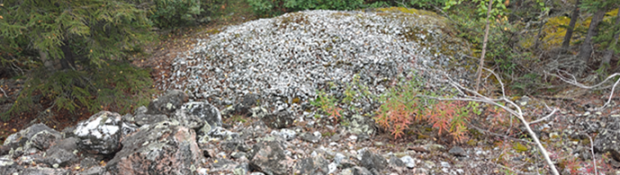
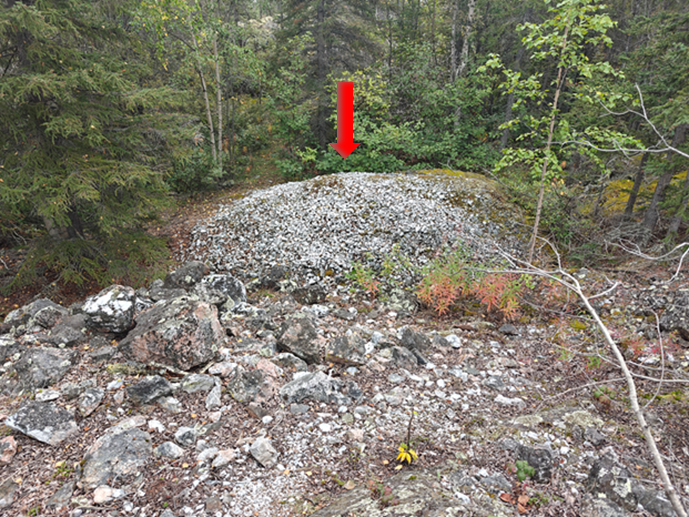
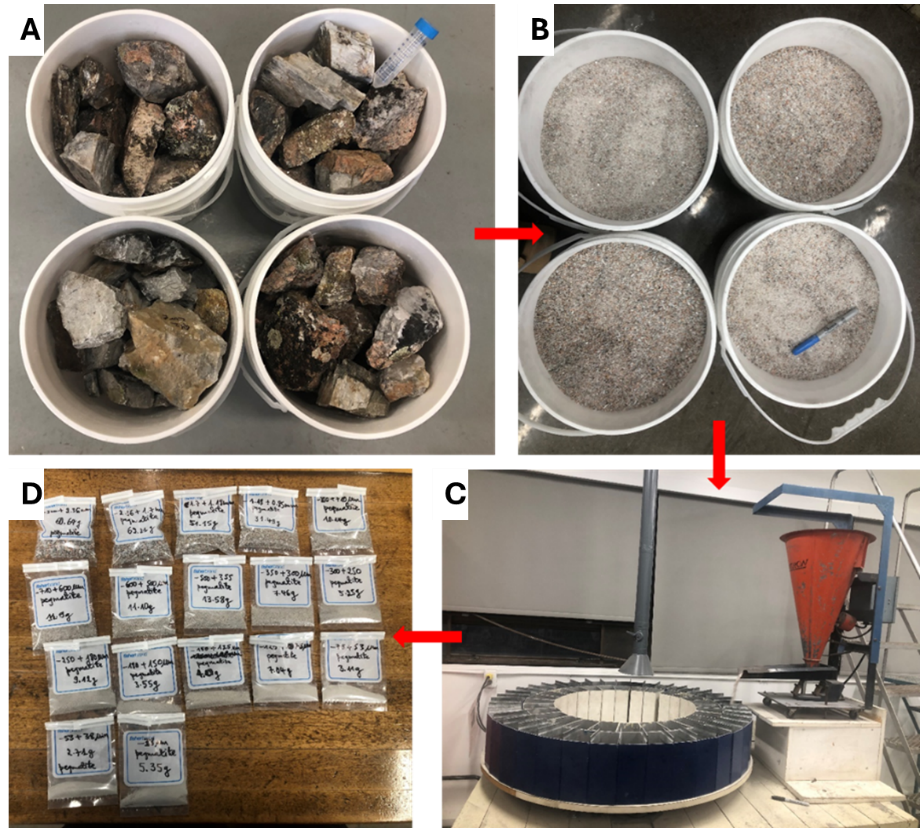
The project aims to develop a fundamental understanding of how amblygonite and montebrasite behave in flotation. This entails identifying the flotation properties of amblygonite and montebrasite, particularly properties that distinguish them from other related minerals found in granitic pegmatites. The samples are sourced from the DeStaffany pegmatite dyke, which contains stockpiles of amblygonite (and montebrasite) from historic mining activities.
Schedule
This ongoing project started in 2023 and is anticipated to conclude in 2026. Preliminary findings were presented at the 2023 and 2024 Yellowknife Geoscience Forum.
Keywords
Amblygonite; montebrasite; pegmatites; lithium; spodumene; rare metals; critical minerals; columbite; tantalite; Moose II; DeStaffany; Best Bet